// SPECIES PROFILE · PERENNIAL · NATIVE · POLLINATOR · PRAIRIE
False Sunflower
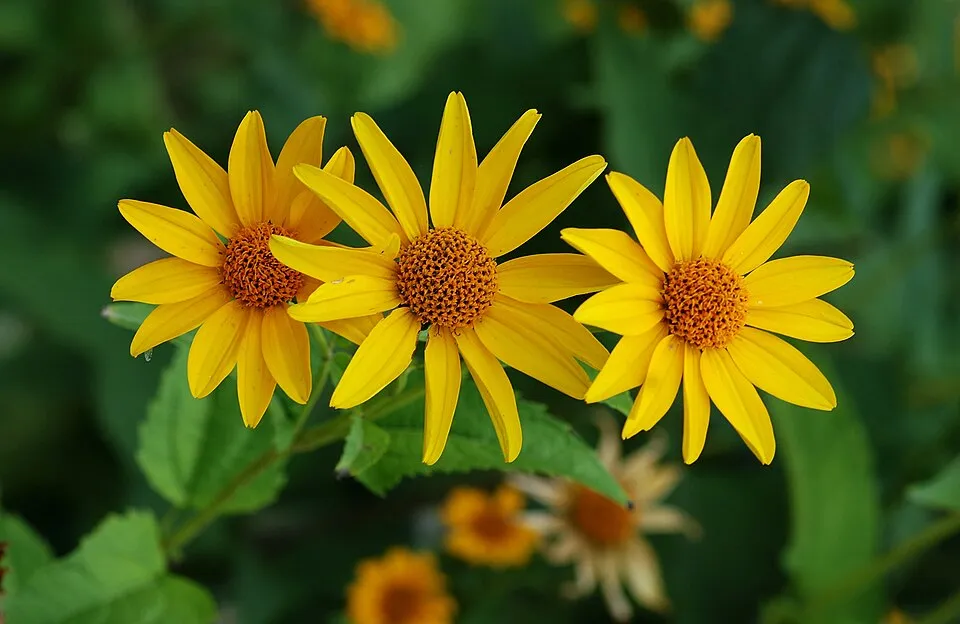
False Sunflower (also called Oxeye Sunflower or Smooth Oxeye) is one of the most reliable and forgiving native perennials in the eastern tallgrass prairie flora — a long-blooming, clump-forming plant producing masses of golden-yellow daisies from early summer well into fall if deadheaded. Despite the common name and a strong resemblance to the true annual sunflower (Helianthus annuus), Heliopsis helianthoides is a true perennial with a fibrous root system (not a taproot), making it far easier to transplant and divide. It laughs at heavy clay, thrives on disturbed ground, and blooms in its first year from seed — making it the default "starter native" for NE Oklahoma pollinator meadows, prairie restorations, and tough sunny borders.
- Family
- Asteraceae (sunflower / daisy family)
- Life cycle
- Herbaceous perennial; long-lived clump former
- Native range
- Eastern & central N. America — Ontario to Florida, west to the Great Plains
- USDA hardiness
- Zones 3–9 (Tulsa = 7a/7b)
- Mature size
- 3–6 ft tall × 2–4 ft wide
- Bloom period
- June – September (NE OK), longer with deadheading
- Flower
- Golden-yellow rays around a yellow-brown disk; 2–3 in across; semi-double to double cultivars exist
- Sun
- Full sun to part sun; tolerates light shade but blooms best in full sun
- Soil
- Any well-drained soil; thrives in heavy clay; pH 5.5–8.0; tolerates poor, rocky, and disturbed soils
- Water
- Medium; drought-tolerant once established; withstands occasional wet feet
- Wildlife
- Bee magnet · host for painted lady & checkerspot butterflies · goldfinch seed · long-bloom nectar source